
Product
Waste Heat Recovery Boiler (WHRB) manufacturer
Grandeh designs and fabricates fire-tube and water-tube WHRB systems in India — office in Pune, works in Aurangabad — turning process exhaust into steam without extra fuel firing.
Grandeh WHRB capability at a glance
For buyers comparing boiler manufacturers in Pune and across India, Grandeh sits in the custom industrial / mid-to-large process class: engineered WHRB pressure parts and packages for plant exhaust duties, not utility-scale fired EPC.
| Capability | Grandeh WHRB envelope |
|---|---|
| Manufacturer class | Custom fabricator — industrial WHRB & boiler pressure parts (Pune office, Aurangabad works) |
| Steam capacity | Up to 100+ TPH (application dependent) |
| Design pressure | Up to about 110 bar |
| Boiler types | Fire-tube (smoke-tube) and water-tube WHRB |
| Heat source (no fired fuel) | Furnace, kiln, incinerator, DRI, cement cooler / preheater, turbine and process-gas exhaust |
| Gas temperature | About 250°C–650°C (materials dependent) |
| Primary applications | Steel & DRI, cement, sugar / distillery cogeneration, captive power, chemical & incineration |
| Compliance | IBR-aligned design & manufacturing; TPI when specified |
What is a waste heat recovery boiler?
A waste heat recovery boiler (WHRB) sits in the exhaust path of process equipment — furnaces, incinerators, DRI kilns, cement lines, coke ovens, gas turbines and similar sources — and generates steam without a dedicated fired furnace. Hot flue gas supplies the heat; water and steam circulate in engineered pressure parts.
Grandeh is a WHRB manufacturer serving process plants from a Pune registered office and Aurangabad fabrication works. We design and build fire-tube (smoke-tube) and water-tube WHRB arrangements — plus drums, headers and tube banks — with IBR-aligned practice at Shendra MIDC. Project documents are available to partners through the project portal.
How a WHRB works
- Heat source — hot flue gases from furnaces, kilns, incinerators, turbines or process equipment enter the WHRB
- Heat transfer — energy moves through tubes and banks into circulating water in the pressure parts
- Steam generation — recovered heat converts feedwater into saturated or superheated steam for process headers or turbines
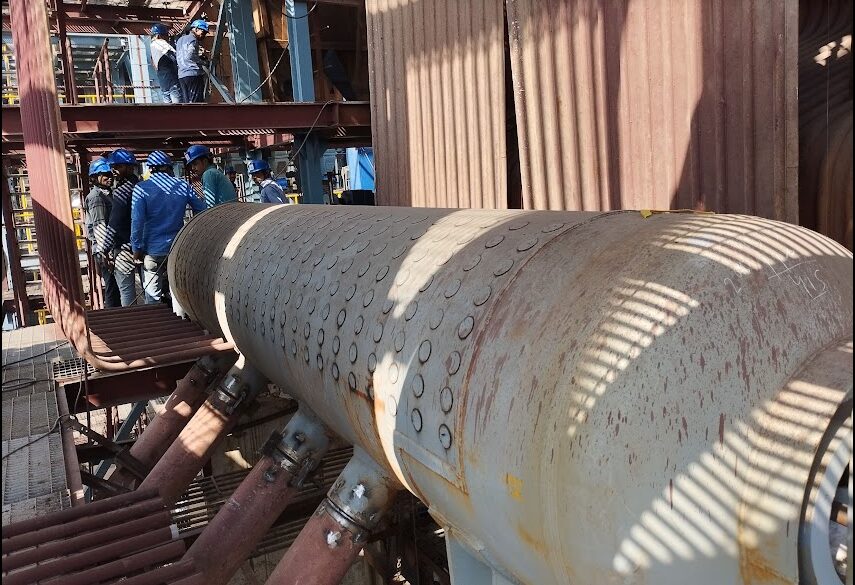
Waste heat boilers — fire tube
Fire-tube (smoke-tube) WHRBs pass hot gas through tubes surrounded by water in a shell. They suit many furnace, incinerator and process-gas duties where capacity and pressure allow a compact, often shop-built package — reducing site erection time.
- Shop-built assemblies where transport limits allow
- Straightforward inspection access for tubes and shell internals
- Practical for moderate steam capacity and pressure with clean-to-moderate gas
- Layout can be tailored to available duct and plant footprint
Waste heat boilers — water tube
Water-tube WHRBs circulate water/steam inside tubes heated by gas on the outside. They are preferred for higher steam capacity and pressure, dusty or high-temperature exhaust, and field-erected heat-recovery trains (steel, cement, power).
- Higher capacity / pressure class relative to typical fire-tube envelopes
- Bank and panel arrangements sized for dust loading and gas temperature
- Natural or forced circulation as duty requires
- Integration with drums, headers, soot-blowing provisions and duct isolation
Design focus
- Maximum practical recovery from the available gas duty without starving the process draft
- Heat-transfer surfaces and materials matched to gas chemistry (including sulphurous or dusty exhaust)
- Drainable, inspectable pressure parts with tube-to-tubesheet integrity as a design priority
- Shop vs site split selected for transport, craneage and erection schedule
- Online cleaning / soot-blowing interfaces where fouling is expected
- IBR statutory scope handled in design and manufacturing documentation
Applications
- Furnace exhausts — metallurgical, steel / DRI, petroleum and petrochemical, chemical plants
- Incinerator exhausts — process and chemical incineration heat recovery
- Kiln / cooler gas — cement preheater and cooler trains
- Boiler / turbine exhaust — power, sugar, distillery, paper and process cogeneration
- Process gas boilers — heat recovery from process gas streams where steam demand and gas duty align
What information is required to size a WHRB?
Gas-side design data
- Flue-gas / process-gas mass or volumetric flow
- Inlet (and required outlet) gas temperature (°C)
- Gas analysis, sulphur / corrosives, moisture and dust loading
- Allowable gas-side pressure drop and available draft
- Duct size, orientation and connection standards
Steam and water data
- Required steam capacity (TPH) and design / working pressure
- Saturated or superheated steam temperature
- Feedwater temperature and quality
- Blowdown, condensate and steam-header interfaces
Mechanical and site data
- Preferred fire-tube or water-tube arrangement
- Plot plan, craneage, shop-built vs field-erect preference
- Material preferences and cleaning / inspection access
- IBR / TPI / documentation scope for the purchase order
Share flue-gas analysis, temperature, dust loading and steam pressure — we will propose a practical drum, tube-bank and duct arrangement.
Technical specifications
| Parameter | Typical envelope |
|---|---|
| Design & construction focus | IBR-aligned design & manufacturing |
| Boiler type | Fire tube (smoke tube) / water tube |
| Steam capacity | Up to 100+ TPH (application dependent) |
| Design pressure | Up to ~110 bar |
| Steam condition | Saturated / superheated as specified |
| Gas temperature | About 250°C to 650°C (materials dependent) |
| Circulation | Natural / forced |
| Hydrostatic test | As per IBR / purchase-order factor on working pressure |
| Heating surface | Sized to available heat duty and allowable ΔP |
| Fuel requirement | No additional fuel firing (waste-heat duty) |
| Works | Shendra MIDC, Aurangabad — ISO 9001 fabrication |
Available materials
Metallurgy follows gas temperature, dust chemistry, steam pressure and inspection-agency preference. Typical options include:
- Tubes: Carbon steel (e.g. SA-210) for moderate duties; alloy grades such as SA-213 T11 / T22 where metal temperatures require elevated creep strength; stainless or selected clad tubes where gas is corrosive or ash is aggressive.
- Drums & headers: SA-516 / SA-106 Grade B or equivalent carbon steel as default; alloy or stainless when specified for high-temperature or corrosive service.
- Tube sheets & fittings: Matching plate and forged fittings sized to design pressure, with attention to tube-to-tubesheet joints and drainable circuits.
- Casings & duct interfaces: Carbon steel with protective coating, refractory or insulation as duty demands; expansion joints and dampers coordinated with the gas path.
Final bill of materials is confirmed against flue-gas analysis, design temperature and client / TPI specifications.
Testing and documentation
Grandeh supports project QA with fabrication and inspection documentation aligned to industrial EPC practice:
- Dimensional inspection and hydrostatic testing of pressure parts as specified
- Material test certificates (MTC) for drums, tubes, headers and fittings
- Welding procedure / welder qualification records where applicable
- Non-destructive examination (e.g. DP / other methods) as called in the purchase order
- GA drawings, heat-balance inputs, coil / bank data sheets and as-built documents for site erection
- Third-party inspection (TPI) coordination — e.g. Bureau Veritas, TÜV, LRQA — when specified
- Quality documents available via Grandeh project portal
Benefits
- Fuel savings by using existing waste heat — no extra firing for the recovered steam
- Lower operating cost and CO₂ intensity
- Improved overall plant thermal efficiency
- Typical industrial payback often in the 12–30 month range (duty dependent)
- Steam available for process use or captive power
- Tailor-made layout to suit site ducting and maintenance access
Complete system supply
- Pressure parts, drums, headers and tube banks
- Ducting, dampers and expansion joints
- Insulation and support structures
- Related heat-recovery auxiliaries such as SCAPH where combustion-air heating is part of the plant scheme
Industries we serve with WHRB
- Steel & DRI — kiln / cooler / furnace exhaust
- Power and captive power — turbine / process exhaust recovery
- Sugar, distillery and process cogeneration
- Boiler OEMs and EPC partners — pressure-part and package supply
- Cement, glass, coke oven, chemical and incineration plants
See a recent dispatch: WHRB pressure parts for steel-plant heat recovery.
FAQ
What is a waste heat recovery boiler?
A WHRB captures heat from hot industrial exhaust and converts it into steam for process use or power generation — without a dedicated fired furnace.
Fire-tube vs water-tube — which WHRB do I need?
Fire-tube (smoke-tube) units suit many compact, shop-built duties. Water-tube arrangements are preferred for higher capacity/pressure, dusty or high-temperature gas, and field-erected trains. Share gas and steam data and we will recommend the fit.
What data is required to size a WHRB?
Gas flow, temperatures, analysis and dust loading; required steam TPH and pressure; feedwater conditions; plot / duct constraints; and preferred fire-tube or water-tube arrangement.
What capacity and pressure can Grandeh reach?
Application-dependent steam capacities into the 100+ TPH class, design pressures up to about 110 bar, and gas temperatures approaching 650°C where materials allow.
What materials does Grandeh use for WHRB pressure parts?
Carbon and alloy steel tubes (e.g. SA-210, SA-213 grades), SA-106 / SA-516 drums and headers, and stainless or clad surfaces where gas chemistry demands it.
Do you supply complete packages or pressure parts only?
Both — drums, tube banks, headers, and optional ducting / dampers as scoped in the order.
Do you support TPI and IBR documentation?
Yes. Pressure-part practice is IBR-aligned at our Aurangabad works, and we coordinate hold points with client or third-party inspectors as specified.
Is Grandeh a WHRB manufacturer in Pune?
Yes. Registered office in Sant Nagar, Pune; manufacturing at A-104, Shendra MIDC, Aurangabad. We supply fire-tube and water-tube waste heat recovery boilers and pressure parts for steel, cement, power and process plants across India.
How does Grandeh compare to large EPC boiler houses?
We are a custom industrial fabricator focused on process and mid-to-large heat-recovery duties (WHRB into the 100+ TPH class, ~110 bar), package and water-tube boilers, SCAPH and dampers — not a utility-scale EPC. That is the class buyers usually mean when they shortlist Pune / Maharashtra WHRB partners for steel, sugar, distillery and captive power.